
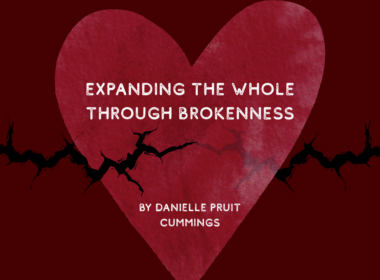
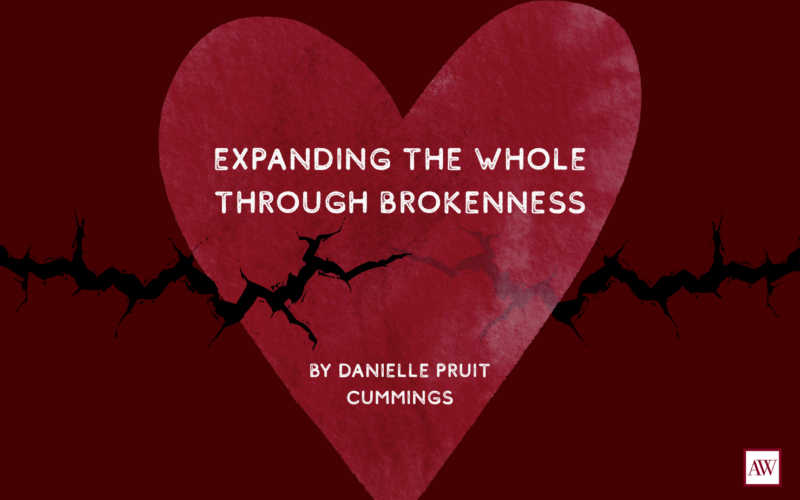
When something breaks and is pieced back together, the story of the breaking becomes inherent to the object. The item is no longer only what it first was; it is also its mended, expanded version of wholeness.
A main fissure that helped my wholeness expand was becoming acquainted with the human immunodeficiency virus (HIV). While certainly relevant and part of the national conversation in my passport country, the United States—which at the time involved headlines of Magic Johnson’s announcement and increasing awareness of LGBTQ+ healthcare needs— I as a sheltered thirteen-year-old was not savvy to the accelerating research and public stigma around that virus nor any other virus. That is, until my parents, brother, and I moved to Nairobi, Kenya.
In accordance with my adolescent sense of invincibility, and removed from the moral-political contamination of emerging information in the States, HIV did not scare me. My mom was a registered nurse, and learning about the existence of HIV in Kenya was about as loaded as learning about the British word for grocery cart (trolley); I did not have an emotional value attached to the existence of a disease. Sometimes naivety is also liberation.
In rapid succession, I learned about HIV—its existence, its prevalence, and then, its face.
The last one broke me.
Without treatment, 25 percent of babies born to HIV-positive mothers contract the virus. In other words, before today’s treatment options were discovered or circulated, at least three out of four babies were facing a typical HIV-negative lifespan without the presence of their mother. At that time, in the late nineties, I was told that the rate at which Kenyans were dying of HIV/AIDS was equivalent to a 747 plane going down each day: a conservative estimate of 500 people. I was also told that I could only contract HIV if I mixed blood or had sex with someone with HIV. As a devout, conservative TCK missionary kid, I was neither sexually active nor was I getting into any permanent, blood-exchanging friendship pacts any time soon.
I had no idea that while Kenya declared it a public health crisis, my own country was still awash with fear and unease about HIV and its contagion. I had no idea that people thought it transferred through sweat, toilet seats, or, in some cases, was a divine judgment against gay men. I might have never cared were it not for my three youngest siblings being added to our family through adoption. I might have never been broken of my ignorance.
Two of them did not contract HIV from their biological mothers. One in seven people in Kenya at that time had HIV. After the adoption of my sister, our family fit the statistic. We were brokenhearted to learn that her HIV test was not indicating antibodies left over from her birth but indicated actual replicating cells. I remember my mom saying you never want to know what your child would die from. In the late nineties, the diagnosis felt like a catastrophic bookend; hopes and visions of her future “normal” life seemed too fantastic. Though too young to crawl, and the completing person in our family, my baby sister simultaneously introduced us to life and grief, wholeness and brokenness.
Our grief was pronounced and complicated when news traveled to our home country and church. Having recently left the States, my connections had remained strong and I thought the world of “home.” We were all shocked when the church responded to my sister’s health and adoption negatively. As our relationship with its leadership unraveled on the basis of her HIV status, I felt tossed and spun, like a towel in a dryer. What had previously been “north” in my personal, faith, and social development became an adversary, unpredictable and unsafe. Not only was the future we had assumed for my sister full of question marks and holes, but our primary support system and authority structure was breaking apart. I remember my mom sitting on the floor crying. Water was running down the wall next to her because our roof top water tank was leaking. My dad was back in the States briefly to meet with the church and a professional mediator. The water tank and ceiling were not the only things disintegrating.
Brokenness pushes us to greater depths of ourselves. The rawness of our emotion, the impulse to shut down or self-soothe by whatever means possible, the new scale by which we judge things significant or not—these new realities are all immediate and simultaneous. There are moments we wonder incredulously at the cars still driving by, the advertisements still barraging, and the birds still singing. How could life go on when life as we know it has irrevocably changed? The bathroom floor, the steering wheel, and the pillowcase all receive the tears, cries, or punches too intimate, too unfurled for even the closest friends. We are plunged into a truthfulness about our fragility we can either embrace or spend the rest of our lives denying.
We are plunged into a truthfulness about our fragility we can either embrace or spend the rest of our lives denying.
Through a beloved baby’s HIV status, and a stateside reaction, I was baptized into a brokenness from which I never fully recovered. The breaking became part of the story; the whole expanded. It was the fault line that led to many different earthquakes and openings.
As I learned the proper way of holding babies as a (much older) big sister, I learned the possibility of holding contradictory emotions like wonder and despair. I learned that fear drives many decisions. I learned that home was a movable object and people let you down. I learned that I identified with an excluded and stigmatized community now, and while I was further displaced socially, spiritually and physically, I was also more grounded than before. I learned that I never wanted to be the person rejecting someone on the basis of their own brokenness. And I learned that brokenness doesn’t always break us.
My sister started anti-retroviral drug therapy at the age of three. I was in my first year of university a world away and it hit me like a ton of bricks. Grief comes in waves; we deal with reality in pieces. The existence of medication was actually hopeful; the clinical need for it within her body was devastating.
Grief comes in waves; we deal with reality in pieces.
The unfolding story of my sister’s health and wellness, which is of course much more expansive than the virus itself, has been a beautiful narrative. She is presently twenty years old, on scholarship at the same university I attended when she was a toddler. She has taken ownership of her own story and shared it generously to continue the deterioration of HIV stigma and misinformation. She embodies the concept that Japanese kintsugi artists practice: brokenness is not something to cover or hide but to attend to and leverage. It neither defines the thing nor ruins the thing; it helps it become.
Today, as a hospital chaplain, I’ve had the opportunity to join the crying mother with the ceiling disintegrating around her. I feel capable of expanding and including new volume. First on my thank-you list in this learning is my adolescent initiation into living with HIV and being betrayed. Brokenness made me vulnerable to more brokenness, but along the way I lost some fear and gained connection. Is there anything else we could hope for?
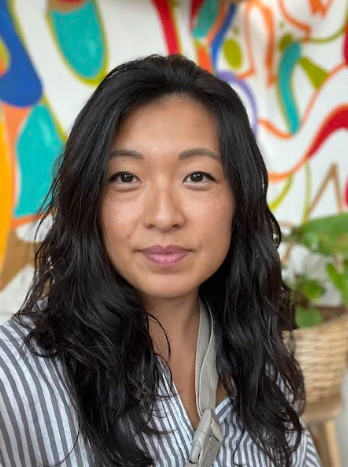
Danielle lives in southern California, outnumbered by her three sons, husband and dog named Chewy. She’s an interfaith inpatient palliative care chaplain, continuing to engage theology through the lens of illness and doubts. Her sons think their Aunt Grace is the coolest.