




Tell us a little bit about yourselves and your history. Where have you lived and what cultures have you grown up around?
We grew up in Macau, and Paji grew up with a Filipino mom and Sri Lankan dad, while Iasmin grew up with a Brazilian mom and Filipino dad, but we were also influenced by Cantonese and Portuguese culture from our friends, classmates, and people around us.
You’re both mixed-Asian and grew up outside of your parents’ home countries. How has this blending of multiple cultures shaped you and how you understand yourself in the world?
We learned early on to adapt quickly, understanding that every culture carries its own strengths and differences. Moving through different stages of life across cultures, traditions, and languages taught us to stay open and flexible, to fully immerse ourselves wherever we were. In doing so we found a way to feel at home in every place we’ve been.
Not belonging to just one place can feel isolating at times, like being an outcast. But it also means we’re not confined to a single identity. In a way, everywhere becomes home.
Our current theme is Connection, a concept that is very uniquely experienced by TCKs. How did the two of you meet and how have you stayed connected over years and distance?
We first met in kindergarten in Macau, where being the only foreign-looking kids made us bond instantly. We shared that quiet understanding of feeling like outcasts wherever we were. Years later, after college, we both found ourselves in the U.S. having built our lives here in a different kind of foreign place. Then it almost felt inevitable to reconnect, but also deeply nostalgic. We were reconnecting not just as friends, but to a piece of home we had both been missing.
The two of you have built a growing social media platform and also offer Cantonese language lessons. What made you want to start making content? When did you realize that it was something people really connected with?
We realized both of our Cantonese was getting worse, and we hated it, so after meeting up for the first time, we decided we didn’t want to lose a language we had spoken our whole lives, and the funniest way was to make funny social media posts about our shared culture.
We quickly realized that the Cantonese community in the U.S. was much larger than we had expected. While some people lose touch with their language and culture after years of immersion in American society, schools, and customs, we were surprised by how many were eager to reconnect with their roots. Many showed genuine interest in learning Cantonese from us and embracing that part of their identity again.
How has your platform personally helped you with staying connected to your culture(s)?
Our channel has helped us stay connected to our culture by expanding our understanding of what it means to be part of the Cantonese community. At first, we thought of Cantonese as something tied mainly to Macau and Hong Kong, but through our platform, we’ve realized it connects people all over the world.
It’s also given us the opportunity to meet others from Cantonese-speaking regions, and building those connections here has made this place feel much more like home. Seeing and hearing how others engage with the culture in their own ways has made us feel even more grounded and connected, even in an English-speaking environment.
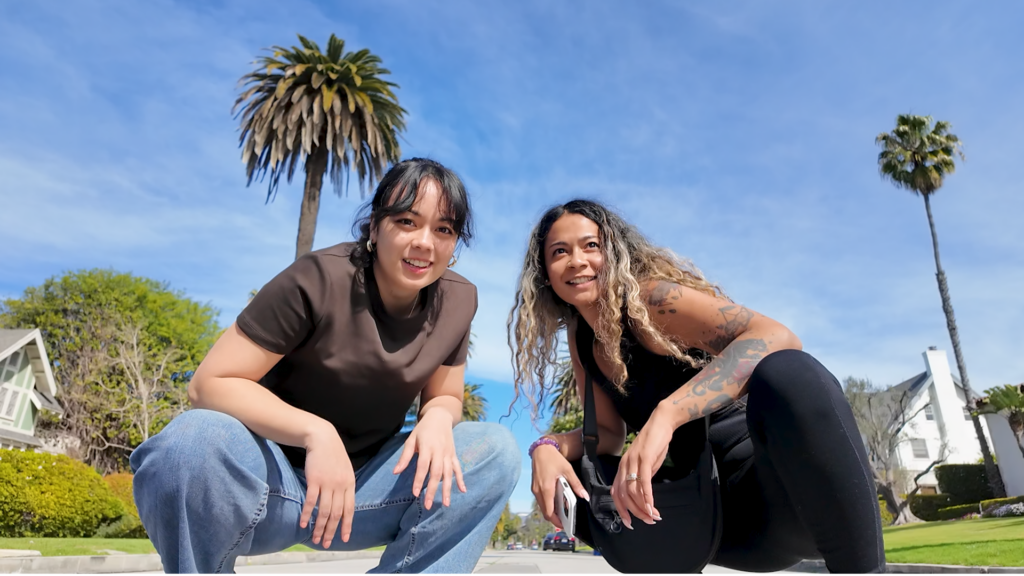
Iasmin and Paji, two best friends born in Macau who moved to the United States, created Outcasts From The 853, a social media platform dedicated to teaching Cantonese and sharing Asian culture with the world. With 160k followers on social media (@outcastsfromthe853) and 8K subscribers on YouTube, they have become a well-known community for Cantonese learners and lovers in the US.